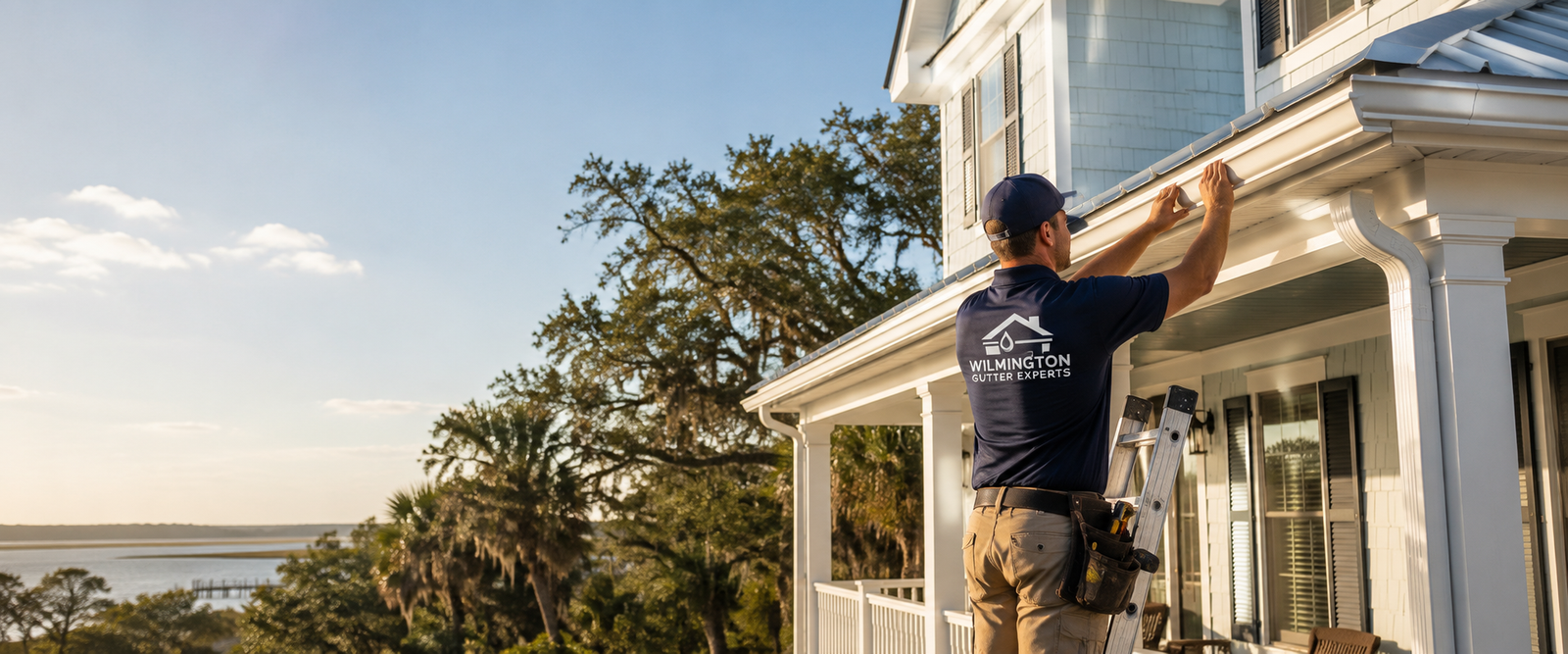
If you own a home within a few miles of the coast and you’re noticing gutter problems earlier than you’d expect, salt air is very likely part of the reason. Here’s what’s actually happening at a material level, and what can be done to slow it down.
Galvanic Corrosion, Explained Simply
Most gutter systems combine aluminum gutter material with steel fasteners and hangers. When two different metals are in contact and exposed to an electrolyte — and salt-laden moist air functions as exactly that — a chemical reaction accelerates corrosion at the point of contact. This is called galvanic corrosion, and it’s a big part of why gutter hardware near the coast fails faster than the gutter material itself does.
Why This Shows Up First at Fasteners and Hangers, Not the Gutter Body
The aluminum gutter channel itself is reasonably corrosion-resistant on its own. The steel screws, hangers, and brackets holding it in place are where galvanic corrosion concentrates, which is why a lot of coastal gutter failures look like a section suddenly sagging or pulling loose, rather than the gutter material itself visibly deteriorating first. By the time you notice sagging, the hardware has often been corroding for a while.
How Much Faster Does This Happen Near the Water?
There’s no single universal number since it depends on exact distance from salt water, prevailing wind direction, and how exposed a given side of the house is, but it’s common to see hardware-related failures within a third to half the time near direct oceanfront exposure compared to homes several miles inland with standard hardware.
Coastal-Rated Hardware Slows This Down Significantly
Stainless steel or specially coated fasteners rated for coastal exposure resist galvanic corrosion far better than standard steel hardware. The material cost difference is relatively small as a percentage of a full installation, but the difference in how long the hardware lasts before needing repair is substantial. We use coastal-rated hardware as standard practice on installations within a few miles of the water, rather than treating it as an optional upgrade.
What You Can Do on an Existing System
If your current gutters use standard hardware and you’re seeing early corrosion, hangers and fasteners can often be replaced with coastal-rated hardware without replacing the entire gutter system, assuming the gutter material itself hasn’t corroded through. This is a relatively affordable way to extend the life of an otherwise sound system.
Other Ways to Slow Salt-Related Wear
Regular cleaning helps, since standing debris holds moisture against gutter material and hardware longer, compounding the corrosion process. Rinsing gutters occasionally to remove salt residue can help as well, particularly for homes with direct oceanfront exposure where salt spray accumulates on exterior surfaces generally.
Seeing early corrosion on your gutters? Learn more about our gutter repair services, or call 910-983-1644 for a free inspection.